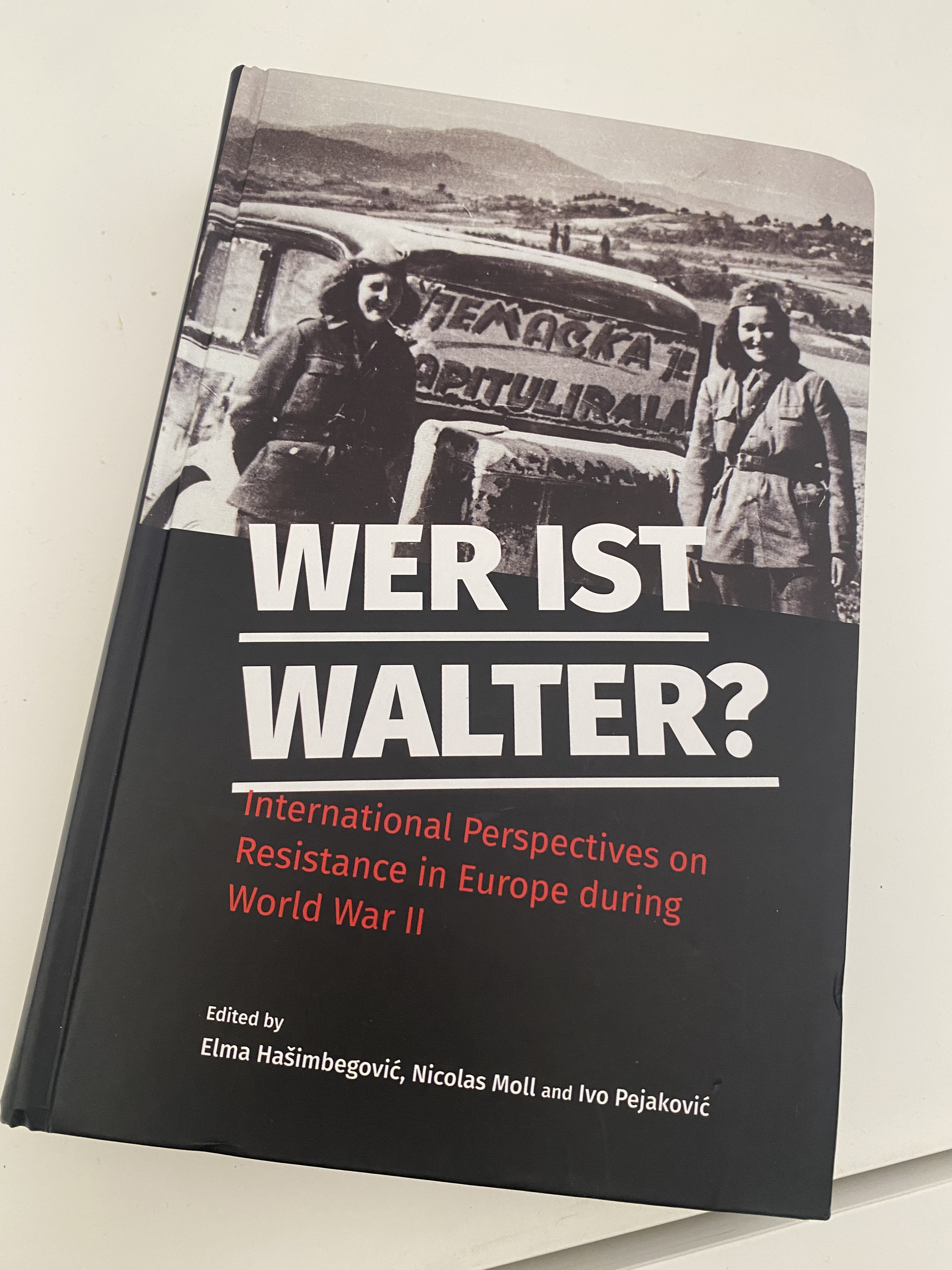
The book „Wer ist Walter? International Perspectives on Resistance in Europe during World War II” gathers 32 contributions and case studies on the history of resistance against Nazism, fascism, occupation and collaboration during World War II, as well as on its transmission after 1945, especially in Museums. The authors are historians, curators and other researchers from Bosnia and Herzegovina, Croatia, France, Germany, Serbia and other countries.
My chapter ‘The Partisan Resistance Goes Global: Yugoslav Veterans and Decolonisation’ examines the afterlives of World War II resistance,
exploring the role of the People’s Liberation War in the context of Yugoslav
non-alignment and decolonisation and focusing on the agency of veterans
— the Partisans — and their relationship with the anti-colonial liberation
movements. The chapter centres on the narratives of the common struggle
for liberation and the sharing of the Yugoslav experience of the People’s
Liberation War and the postwar building of state socialism in the postcolonial world, focusing on medical assistance to the FLN. The Partisans
represent a valuable lens of analysis as key political actors in socialist Yugoslavia, leading agents of the culture of war remembrance and as women
and men with a direct experience of war and revolution. Their agency in the
decolonisation context transpired through, on the one hand, the veteran
association SUBNOR as a socio-political organisation involved in all solidarity initiatives and, on the other, individually as the Partisans occupied
leading positions in state institutions, embassies, and other socio-political
organisations. The Yugoslav relationship with Algeria and the FLN serves
as the main case study for illustrating connected histories of anti-fascism
and anti-colonialism.
The whole book is available here.
 Jelena Đureinović